How long to steep tea and at what temperature: a guide by type
Water temperature and steeping time decide whether tea tastes gentle or bitter. A clear table for nine types of tea and tips for fine-tuning the flavor.
Contents
The same tea can taste gentle and slightly sweet or bitter and flat. What decides it is mostly water temperature, steeping time and the amount of leaf. Every type of tea needs a slightly different approach, so we put together an overview of recommended values for the most common loose leaf teas, plus a few tips for adjusting them to your own taste.
Why temperature and time matter
Hot water draws aroma and flavor out of the leaves, but it also draws out tannins, which make an infusion bitter. The hotter the water and the longer it works, the more tannins end up in your cup. That is why boiling water can easily turn a delicate green tea into a bitter drink.
On the other hand, black tea or rooibos stay weak and flat in lukewarm water. They only release their full flavor at temperatures close to boiling. With every type of tea, the goal is to find the balance between flavor and bitterness.
Overview by type of tea
The values in the table are approximate and apply to everyday brewing in a teapot or in a mug with an infuser. The amount of tea is given for 200–250 ml of water, which is about one larger cup.
| Type of tea | Amount per 200–250 ml | Water temperature | Steeping time | Number of infusions |
|---|---|---|---|---|
| Green | 2–3 g | 70–80 °C (158–176 °F) | 2–3 min | 2–3 |
| White | 2–3 g | 75–85 °C (167–185 °F) | 3–5 min | 2–3 |
| Oolong | 2–3 g | 85–95 °C (185–203 °F) | 2–4 min | 3 or more |
| Black | 2–3 g | 95–100 °C (203–212 °F) | 3–5 min | 1 |
| Pu-erh | 2–3 g | 95–100 °C (203–212 °F) | rinse for 5–10 s, then 3–5 min | 3 or more |
| Yerba mate | 3–5 g | 70–80 °C (158–176 °F) | 3–5 min | 2–3 |
| Rooibos | 2–3 g | 100 °C (212 °F) | 5–8 min | 1–2 |
| Herbal | 2–3 g | 100 °C (212 °F) | 5–8 min | 1 |
| Fruit | 3–5 g | 100 °C (212 °F) | 8–10 min | 1 |
When you re-steep the same leaves, make each further infusion half a minute to a minute longer. Leaves that have already been steeped once release their flavor more slowly.
Notes on individual types
Green and white tea
Green tea is the most sensitive to water temperature. Delicate Japanese teas are best brewed near the lower end of the range, while Chinese green teas tolerate slightly hotter water. If green tea has always tasted bitter to you, try lowering the temperature first and only then shorten the time. The whole story is in our comic Why is green tea bitter? You can read more about this type in the article Green tea.
White tea has large, light leaves or whole buds, so 2 to 3 grams take up more room in a spoon than with other teas. It is more forgiving of brewing mistakes than green tea, and a longer steep usually just makes it stronger.
Oolong
Oolongs differ greatly in their degree of oxidation. Brew light, greenish oolongs closer to 85 °C (185 °F), and dark, roasted ones closer to 95 °C (203 °F). You can steep the same leaves several times, and each infusion tastes a little different. We cover them in more detail in the article Oolong tea: between green and black.
Black tea and pu-erh
Black tea needs water just after it reaches a boil. Stronger blends, such as those with Indian Assam, tend to turn bitter when steeped for a long time, so start with three minutes and extend the time to taste. If you drink your tea with milk, feel free to steep it longer.
Pu-erh should be briefly rinsed before the first infusion. Pour boiling water over it, pour the water off after five to ten seconds, and only then make the infusion you will drink. For pressed pu-erh, first carefully break a piece off the cake. You can find more in the article about pu-erh tea.
Yerba mate, rooibos, herbs and fruit
Yerba mate is not tea in the strict sense, but it is prepared in a similar way. Boiling water brings out its bitterness, so give it 70 to 80 °C (158–176 °F). Because it has light, crushed leaves, it needs a somewhat larger amount.
Always pour boiling water over rooibos, herbal and fruit blends. With dried plant parts, this is also recommended for hygiene reasons. These infusions do not turn bitter as quickly as true tea, so they can handle longer steeping. With fruit blends that contain hibiscus, though, keep in mind that the sourness increases over time.
What water is best for tea
A cup of tea is mostly water, so its quality shows in the taste. The best results come from fresh, fairly soft water without a strong chlorine taste.
Hard water with a high content of calcium and magnesium makes the infusion cloudier, and a thin film can form on the surface. If you have hard water at home, a filter jug or bottled water with a low mineral content can help.
Do not use water that has been sitting in the kettle since morning and has been boiled several times. Distilled water is not ideal either, since tea made with it tastes dull.
How to estimate temperature without a thermometer
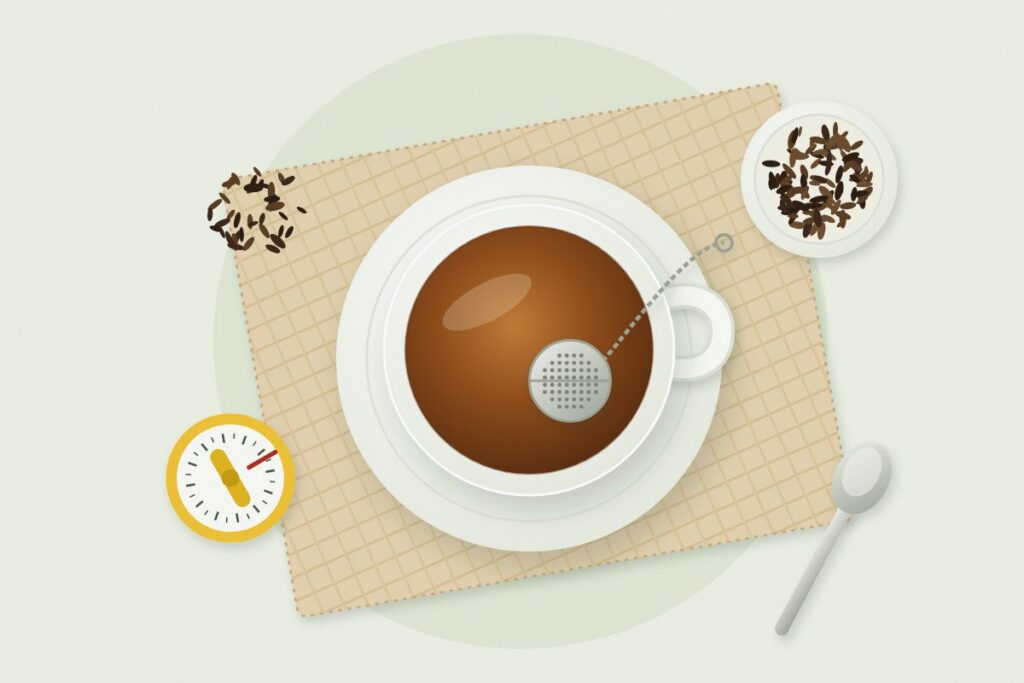
The most convenient option is an electric kettle with temperature settings. Without one, you can manage easily: bring the water to a boil and let it stand for a while with the lid open. It cools faster if you pour it into another container. Another option is to mix a little cold water into the boiling water.
How fast water cools depends on its amount and on the vessel. It is worth checking once with a thermometer and remembering how many minutes you need to wait. You can find an overview of tools that make brewing easier in the article A guide to tea brewing equipment.
Grams, spoons and fine-tuning the flavor
A kitchen scale is the most accurate, but in practice a spoon is enough. A full teaspoon of smaller leaves or rolled pellets weighs roughly 2 to 3 grams. With bulky leaves, such as white tea, less fits in the spoon, so use more of them.
If the tea is too strong or bitter, shorten the time or lower the temperature. If it is weak, add more leaves. Extending the time usually adds more bitterness to the cup than flavor. When the time is up, take the leaves out of the water so the tea does not keep steeping.
Treat the table as a starting point, not a fixed rule. Change only one thing at a time, whether temperature, time or amount, and you will quickly find the setting at which a particular tea tastes best to you.