Chamomile tea: how to make it, dosage, effects and when to be careful
How to make chamomile tea, what doses the EMA gives for drinking, gargling and compresses, what we know about its effects and when to be careful.
Contents
- German chamomile
- Chamomile tea: effects and traditional use
- How to make chamomile tea
- Chamomile tea: dosage according to the EMA
- Chamomile for teeth, gums and throat
- Chamomile for hair and skin
- Chamomile tea for children and newborns
- Chamomile tea during pregnancy and breastfeeding
- When to be careful
- Sources
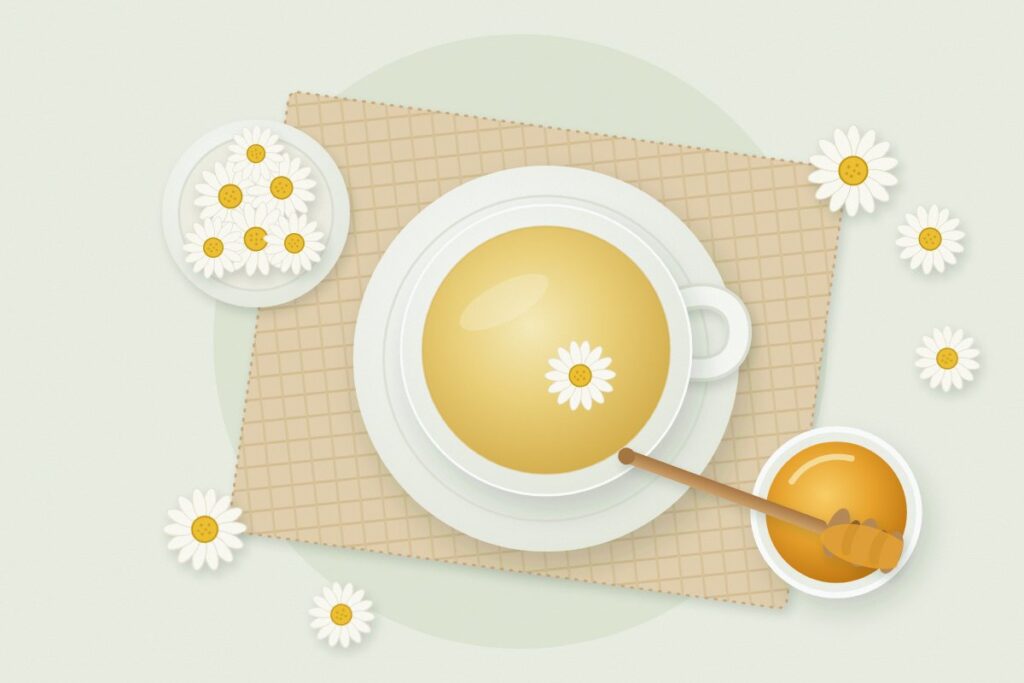
To make chamomile tea, pour a cup of boiling water over 1–2 teaspoons of dried flowers, about 2–3 g. Cover the cup and let it steep for 5–10 minutes. The tea is caffeine-free and tastes mild and honey-like, and the European Medicines Agency (EMA) recognizes chamomile as a traditional herbal medicine for mild digestive complaints, minor inflammation in the mouth and throat, and skin irritation.
Chamomile is one of the best-known herbs in Central Europe, and many people remember it from childhood. The English word chamomile, like the Latin chamomilla, comes from the Greek word chamaimelon, meaning “earth apple,” because the flowers smell faintly of apples. In this article you will find what chamomile tea is traditionally used for, how to make it, what doses the EMA gives for drinking, gargling and compresses, and who should be careful with it.
Important: this article is for general information and does not replace medical advice. If you are giving it to a child, are pregnant or take medication, read the section When to be careful.
German chamomile
The tea is made from the dried flower heads of German chamomile (Matricaria chamomilla, also known as Matricaria recutita). You can recognize it by the white petals around a yellow center that is hollow inside. Chamomile belongs to the daisy family (Asteraceae), like ragweed, mugwort, arnica and chrysanthemum. This matters for people with allergies.
Chamomile tea tastes mild, slightly sweet and honey-like. It pairs well with mint, lemon balm, lavender or a slice of lemon.
Chamomile, German chamomile, Matricaria: one plant, several names
Chamomile tea and German chamomile tea are the same drink, made from the flowers of German chamomile. Its botanical name is written either as Matricaria chamomilla or as Matricaria recutita, and the EMA documents use Matricaria recutita. However, the name chamomile is also used for other, similar plants, such as corn chamomile, which only resemble German chamomile.
Chamomile tea: effects and traditional use
The European Medicines Agency (EMA) published a monograph on chamomile flower in 2015. It states that chamomile is traditionally used:
- for mild digestive complaints such as bloating and mild cramps (for a comparison of herbs, see Tea for digestion),
- as an inhalation for colds (more herbs in Tea for colds),
- as a mouth rinse and gargle for minor irritation in the mouth and throat,
- in compresses and baths for minor skin irritation.
For the skin, the EMA specifically mentions mild inflammation including sunburn, superficial wounds and small boils. As supportive care, it also lists chamomile for irritation of the skin and mucous membranes in the anal and genital area, but only after a doctor has ruled out a more serious condition.
Traditional use means that the herb has been used this way for at least 30 years, including at least 15 years in the European Union, and is considered sufficiently safe. It is not based on clinical studies. So the effect is supported more by experience than by evidence.
No health claim has been authorized in the EU for chamomile tea as a food, and claims about botanical substances are still on hold. If you read somewhere that chamomile cleanses the body or boosts the immune system, these are unverified claims.
Chamomile is also being studied in connection with sleep, anxiety and blood sugar levels. However, the studies so far are small or were done in the lab and on animals. They do not show that chamomile tea treats these problems in people.
Does chamomile tea help you sleep?
The EMA does not list sleep or insomnia among the traditional uses of chamomile. A 2019 review of randomized trials on chamomile did find better sleep quality, but only one study looked at insomnia, and it found no change. There are few studies, they are small, and some tested an extract in capsules rather than tea.
Still, a cup of a warm, caffeine-free drink can be a pleasant part of your evening. We compare which herbs people drink before bed and what we actually know about them in Tea for sleep.
How to make chamomile tea
- For a cup (150–200 ml), use 1 to 2 teaspoons of dried flowers, about 2–3 g.
- Pour boiling water over them.
- Cover the cup with a saucer so the aromatic compounds do not escape, and steep for 5–10 minutes.
- Strain the tea. If you like, sweeten it with honey once it has cooled slightly.
For gargling, use the same infusion, just let it cool to a comfortable temperature. For baths and compresses, a stronger infusion is prepared. You will find the exact amounts in the section Dosage.
Whole flower heads taste best. In tea bags, chamomile is often crushed to dust and loses its aroma faster. Read more about the differences in Loose leaf tea or tea bags. Store dried chamomile in a tightly sealed container, in a dry place away from light, as we recommend in How to store loose leaf tea.
Chamomile tea: dosage according to the EMA
For adolescents from 12 years and adults, the EMA monograph gives these amounts of dried flowers per dose:
| Use | Chamomile | Water | How often |
|---|---|---|---|
| Infusion to drink for digestive complaints | 1.5–4 g | 150 ml, boiling | 3–4 times a day |
| Gargling and rinsing the mouth | 1–5 g | 100 ml, let the infusion cool | several times a day |
| Compresses and washing the skin | 3–10 g | 100 ml, let the infusion cool | several times a day |
| Steam inhalation for colds | 3–10 g | 100 ml, hot | several times a day |
In German package leaflets for chamomile tea, the drinking dose corresponds to about one heaped tablespoon (about 3 g), and the inhalation dose to one to two heaped tablespoons. The flowers are light and spoons vary, so if you want to be precise, weigh them on a kitchen scale.
Always prepare the infusion for gargling and compresses fresh. When inhaling, be careful not to scald yourself with the hot steam or water. The EMA does not list chamomile inhalation for children under 6.
The doses in the table apply to chamomile as a traditional medicine for complaints. For chamomile tea as an everyday drink, such as a cup after lunch or in the evening, the EMA does not give any amount. If complaints last longer than a week or get worse, see a doctor.
For children under 12, the EMA gives smaller doses and not all methods of use. Discuss how much chamomile to give a child with your pediatrician. You will find an overview in Tea for babies and children.
Chamomile for teeth, gums and throat
Folk advice also recommends chamomile “for teeth,” meaning as a mouth rinse for sore gums or an aching tooth. The EMA lists traditional rinsing and gargling with chamomile infusion for minor sores and inflammation in the mouth and throat. Prepare the infusion according to the table above, let it cool and rinse your mouth with it several times a day.
However, chamomile will not cure a toothache. If you have a toothache or a swollen face, your gums keep bleeding or you have a fever, see a dentist. After a tooth extraction, follow the instructions of your dentist, who will tell you when and with what you can rinse your mouth. The EMA does not list chamomile for teething in babies either, so discuss anything you want to give your baby with your pediatrician.
Besides chamomile, sage is the main herb used for gargling when you have a sore throat. You will find a comparison in Tea for a sore throat and Sage tea. If a sore throat lasts longer than a week, makes swallowing or breathing difficult, or comes with a high fever, see a doctor.
Chamomile for hair and skin
On the skin, the cooled infusion is used for compresses and washes. Soak clean gauze or a cotton cloth in it and place it on the irritated area, for example on mild sunburn. The EMA advises against a full chamomile bath in case of open wounds, large skin injuries, acute skin conditions, high fever, severe infections, serious circulatory disorders and heart failure.
In folk cosmetics, chamomile infusion is also used as a hair rinse, especially for fair hair, to add shine and a soft golden tone. This is home experience: the EMA does not list any use on hair, and whether chamomile really lightens hair has not been proven. Protect your eyes when rinsing. If you are allergic to plants in the daisy family, do not use chamomile on your hair or skin, and if itching, redness or a rash appears, stop using it.
Chamomile tea for children and newborns
Chamomile is the herb parents give to children most often. However, babies under six months do not need anything besides breast milk or formula, not even tea. Later on, give chamomile tea weak and unsweetened, and only after talking to your pediatrician.
According to the EMA, chamomile preparations are intended mainly for adults and children from 12 years. Only some are also suitable for younger children, so always follow the package leaflet for chamomile medicines. You will find more details in Tea for babies and children.
Do not give chamomile tea to a newborn. The EMA monograph does not list it for babies younger than six months, for reasons of nutrition and fluid intake. For baths and compresses made with chamomile infusion, the EMA states that there are not enough data on their use in children under 12. So talk to your pediatrician before bathing your baby in chamomile.
Important: give chamomile tea to babies and young children only after talking to your pediatrician. If your baby has a fever, diarrhea, vomiting or crying that cannot be soothed, do not rely on tea; see a doctor.
Chamomile tea during pregnancy and breastfeeding
For tea made from dried chamomile flowers, the EMA considers safety during pregnancy and breastfeeding to be established in its 2015 monograph. This does not apply to extracts, tinctures and other preparations, which it does not recommend during this time due to a lack of data. Since 2022, the EMA has been reviewing the monograph.
In addition, two Italian observational studies found more frequent pregnancy complications, such as preterm birth, in women who drank chamomile regularly. Such studies show an association, not a cause. So drink chamomile tea in moderation and talk to your gynecologist about drinking it regularly. If you use a cream or ointment with chamomile on your nipples while breastfeeding, the EMA recommends washing it off before feeding so that your baby does not develop a sensitivity to it. You will find more in Tea during pregnancy and breastfeeding.
When to be careful
- Allergy to plants in the daisy family: if you are allergic to ragweed, mugwort, arnica or chrysanthemums, chamomile may cause an allergic reaction. The EMA notes that serious allergic reactions have rarely occurred after liquid chamomile preparations came into contact with the lining of the mouth.
- Eyes: do not use chamomile infusion on your eyes. It can irritate them, and an infusion made at home is not sterile.
- Medication: if you take blood-thinning medication, talk to your doctor about drinking chamomile regularly. The EMA also mentions reported drug interactions in kidney transplant patients who took large amounts of chamomile for about two months.
- Iron: in a study in adults, chamomile tea drunk with a meal reduced the absorption of iron from bread by 47%. If you are low on iron, drink it between meals instead.
- Pregnancy and breastfeeding: a cup of chamomile tea is a popular evening drink. If you drink it regularly, talk to your doctor. You can read more in Tea during pregnancy and breastfeeding.
- Complaints that do not go away: if digestive complaints last longer than a week or get worse, see a doctor.
For more herbs for a calm evening, see our articles on linden and lavender tea or the Herbs category.
Sources
- European Medicines Agency (EMA), Committee on Herbal Medicinal Products (HMPC) – European Union herbal monograph on chamomile flower (Matricaria recutita L., flos), EMA/HMPC/55843/2011, 2015, and its public summary (EMA/490629/2015).
- EMA – call for scientific data for the periodic review of the monograph on chamomile flower, EMA/HMPC/72301/2022, 2022.
- Directive 2004/24/EC on traditional herbal medicinal products.
- Hieu T. H. et al.: Therapeutic efficacy and safety of chamomile for state anxiety, generalized anxiety disorder, insomnia, and sleep quality: A systematic review and meta-analysis of randomized trials and quasi-randomized trials. Phytotherapy Research, 2019.
- Hurrell R. F., Reddy M., Cook J. D.: Inhibition of non-haem iron absorption in man by polyphenolic-containing beverages. British Journal of Nutrition, 1999.
- Cuzzolin L. et al.: Use of herbal products among 392 Italian pregnant women: focus on pregnancy outcome. Pharmacoepidemiology and Drug Safety, 2010.
- Trabace L. et al.: “Natural” relief of pregnancy-related symptoms and neonatal outcomes: above all do no harm. Journal of Ethnopharmacology, 2015.
- Package leaflet of a medicinal chamomile flower tea (Kamillen-Tee, Alexander Weltecke GmbH & Co. KG, Germany, 2022).
- Regulation (EC) No 1924/2006 on nutrition and health claims made on foods; EU Register of nutrition and health claims.
We updated this article on November 25, 2026. It is for general information only. For details, see our Disclaimer.