Hibiscus tea: how to make it, what we know about blood pressure and when to be careful
Which hibiscus the tea is made from, how to make it hot or iced, what studies found about blood pressure, and when to be careful with medication, pregnancy and your teeth.
Contents
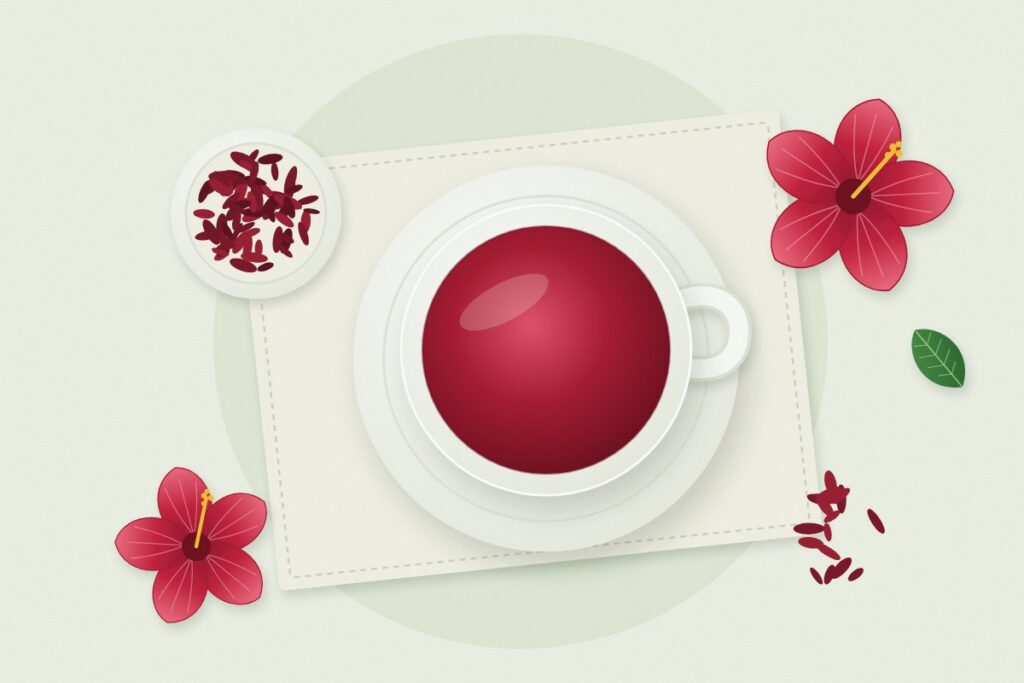
Hibiscus tea, which you may also know as roselle tea or karkadé, is an infusion made from the dried calyces of the roselle plant. It has a deep ruby color and a pleasantly tart, fruity taste that is reminiscent of cranberries. For one cup, 2–3 g is enough: pour boiling water over it and let it steep for 5–10 minutes.
Hibiscus is the base of most fruit teas, so you have almost certainly had it, even if you did not know it. In this article you will find which hibiscus the tea is made from, how to make it hot and cold, what studies have found about blood pressure, and when to be careful.
Important: this article is for general information and does not replace medical advice. If you take medication for blood pressure or diabetes, or if you are pregnant or breastfeeding, read the section Side effects and when to be careful.
Roselle: which hibiscus the tea is made from
The tea is not made from the hibiscus you know from flowerpots or gardens. It is made from roselle (Hibiscus sabdariffa), a plant from warm countries that probably originated in West Africa. Although it is a perennial, it is usually grown as an annual. It is grown, for example, in Sudan, Egypt, Nigeria, Mexico, Thailand and China.
The drink made from hibiscus has many names around the world. In Egypt it is called karkadé, in Mexico agua de jamaica and in West Africa bissap. Everywhere it is drunk mostly cold and sweetened. In English it is usually called hibiscus tea, after the Latin name of the genus.
Roselle vs. garden hibiscus
The word hibiscus refers to a whole genus of plants with large, showy flowers. In Central European gardens and homes, two ornamental species are the most common, and hibiscus tea is not made from either of them.
| Hibiscus | Roselle | Syrian hibiscus | Chinese hibiscus |
|---|---|---|---|
| Latin name | Hibiscus sabdariffa | Hibiscus syriacus | Hibiscus rosa-sinensis |
| Where you come across it | grown in warm countries, imported in dried form | frost-hardy deciduous shrub in gardens and hedges | houseplant |
| What it is used for | tea, syrups, jams | ornamental shrub | ornamental plant |
Despite its name, Syrian hibiscus, also known as rose of Sharon, comes from China and Taiwan. According to some horticultural sources its flowers are edible, but the hibiscus tea you buy in stores is made from roselle. Do not pick flowers from ornamental plants for tea, as they may have been treated with pesticides.
Hibiscus flowers or calyces?
Although hibiscus is often sold as “hibiscus flowers,” the tea is made not from the flowers but from the fleshy dark red calyx that surrounds the fruit after the plant has flowered. The flowers themselves are pale yellow to pinkish. The calyces are harvested when they are plump and fleshy, and then dried. Dried hibiscus is used to make tea, syrups and jams.
What hibiscus tea tastes like
Hibiscus tastes distinctly tart and fruity, similar to cranberries or currants. The tartness comes from natural fruit acids. The color is due to anthocyanins, the same pigments found in blueberries and red cabbage.
Hibiscus is often combined with rose hips, apple, orange peel, cinnamon, mint or ginger. It is added to fruit teas mainly for the color. Without it they would look pale. In winter it also adds tartness and color to Christmas punch.
A fun fact: if you add a drop of lemon to hibiscus tea, the color turns a brighter red. That is because anthocyanins change color depending on acidity.
How to make hibiscus tea
Always use boiling water for hibiscus tea. Dried plants can occasionally carry bacteria such as salmonella, so the German Federal Institute for Risk Assessment (BfR) recommends pouring boiling water over herbal and fruit teas and letting them steep for at least 5 minutes.
| Method | Amount | Water | Time |
|---|---|---|---|
| Hot tea, a 200–250 ml cup | 2–3 g, 1–2 teaspoons | boiling, 100 °C (212 °F) | 5–10 minutes |
| Hot tea, 1 liter | 8–12 g, 4–6 teaspoons | boiling, 100 °C (212 °F) | 5–10 minutes |
| Iced tea, 1 liter | 15–20 g, 8–10 teaspoons | 500 ml boiling, then 500 ml cold water or ice | 5–10 minutes, then chill in the refrigerator |
| Cold brew | as stated on the package | cold drinking water | only blends labeled for cold brewing, following the instructions |
Hot hibiscus tea
- For a cup (200–250 ml), use 1 to 2 teaspoons of dried calyces, about 2–3 g.
- Pour boiling water over them.
- Steep for 5–10 minutes. The longer you steep it, the more tart and darker the tea will be.
- Sweeten with honey to taste, or add a slice of orange.
Hibiscus contains no caffeine, so you can drink it in the evening too. You will find steeping times for other kinds of tea in the article How long to steep tea.
Iced hibiscus tea
- For 1 liter, put 15–20 g of hibiscus, about 8–10 teaspoons, in a teapot.
- Pour 500 ml of boiling water over it and let it steep for 5–10 minutes.
- Strain it and top it up with 500 ml of cold water, or add ice.
- Let it cool in the refrigerator and serve it with ice, lemon or mint.
If it is too tart for you, dilute it with cold water. Do not leave the finished tea standing in a warm place for hours: the spores of some bacteria survive boiling and can multiply again in warm tea. You will find more summer ideas in the articles Iced tea: hot and cold brew methods and Fruit tea.
Can you cold brew hibiscus tea?
When you cold brew tea, you leave it in cold water for several hours. With regular hibiscus, this skips the step that would kill any pathogens. That is why the consumer advice center in Bremen, Germany, explicitly advises against making herbal and fruit teas with cold water.
The exception is blends that the manufacturer has labeled for cold brewing. Their ingredients are usually treated with hot steam so that they contain fewer microorganisms. For these, follow the instructions on the package.
Hibiscus tea and blood pressure: what research shows
Hibiscus tea has been studied most in connection with blood pressure. The results differ depending on how strictly the authors selected the studies. Below is an overview of the research, not a recommendation.
Cochrane: the evidence is insufficient
Cochrane, an organization that evaluates studies very strictly, found only one study in 2021 that met its criteria. It involved 60 adults with type 2 diabetes and high blood pressure who took capsules of hibiscus extract or a placebo for eight weeks. So it was not tea. No difference in blood pressure between the groups was shown, and Cochrane rates the certainty of the evidence as very low.
According to Cochrane, it is therefore not possible to say whether hibiscus lowers blood pressure, or whether it is safe for people with high blood pressure. The study did not include data on side effects.
Meta-analyses: a modest drop in small studies
Meta-analyses with looser criteria included more studies and suggest a modest drop in blood pressure:
- Serban et al., 2015: 5 randomized studies with 390 participants. Systolic blood pressure was on average 7.6 mmHg lower and diastolic blood pressure 3.5 mmHg lower.
- Ellis et al., 2022: 17 studies. Systolic blood pressure was 7.1 mmHg lower than with a placebo, most of all in people whose blood pressure was elevated at the start. However, the results of the individual studies varied widely.
The authors of both papers write that more studies are needed. It is not even clear yet how much hibiscus, and for how long, a person would have to drink for it to possibly have an effect.
What this means
Hibiscus tea is not a medicine for high blood pressure and does not replace treatment. The results are not enough to recommend it for blood pressure. If you have high blood pressure or take medication, talk to your doctor about drinking hibiscus regularly.
The situation is similar for cholesterol, digestion and weight loss. The studies are small and short, and they often examined extracts rather than tea. No health claim has been authorized for hibiscus in the European Union.
So enjoy hibiscus for its refreshing taste and beautiful color. It is an excellent replacement for sweetened soft drinks, especially if you do not sweeten it too much.
Hibiscus tea side effects and when to be careful
Hibiscus is commonly used in foods, and according to the U.S. database MedlinePlus, side effects are rare. In studies, people drank up to 720 ml of hibiscus tea a day for six weeks. Stomach upset, gas or constipation occasionally occurred.
- Blood pressure medication: hibiscus might lower blood pressure, and together with medication your blood pressure could drop too low. If you take such medication, talk to your doctor about drinking hibiscus regularly.
- Diabetes medication: hibiscus can affect blood sugar levels and therefore how these medicines work. If you drink it regularly, talk to your doctor and keep an eye on your blood sugar.
- Other medication: MedlinePlus also lists possible interactions with chloroquine (a malaria medicine), losartan, diclofenac, simvastatin and acetaminophen (paracetamol). With chloroquine, it is recommended to avoid hibiscus completely. If you take medication regularly, ask your pharmacist.
- Surgery: MedlinePlus advises stopping hibiscus at least two weeks before a scheduled surgery, because it can affect blood sugar levels.
- Pregnancy and breastfeeding: the safety of hibiscus during this period has not been established. MedlinePlus considers it possibly unsafe during pregnancy because it might trigger menstruation, and it is recommended to avoid it both during pregnancy and while breastfeeding. Also watch out for fruit teas, where hibiscus is often one of the main ingredients. You can read more in Herbal tea during pregnancy.
- Teeth: hibiscus tea is acidic. You will find details in the next section.
Important: if you are pregnant or breastfeeding, take medication or are being treated for a long-term condition, talk to your doctor or pharmacist about drinking hibiscus tea regularly.
Hibiscus tea acidity and tooth enamel
Hibiscus gets its tart taste from fruit acids, and if you drink it often, they can erode your tooth enamel. In a British laboratory study from 2003, the herbal teas tested had a pH of 3.1 to 7.1, and many of them eroded enamel more than orange juice did. In a U.S. study from 2013, citrus and fruit teas eroded enamel more than black, green or floral teas.
A few rules of thumb can help:
- Drink it with meals rather than sipping it throughout the day.
- Do not hold it in your mouth or swish it around your teeth.
- You can drink iced tea through a straw, so it touches your teeth less.
- Do not brush your teeth right after drinking it. The UK’s Oral Health Foundation advises waiting at least an hour; in the meantime, rinse your mouth with water.
You will find more herbs in the Herbs category.
Sources
- Pattanittum P. et al.: Roselle for hypertension in adults. Cochrane Database of Systematic Reviews, 2021.
- Serban C. et al.: Effect of sour tea (Hibiscus sabdariffa L.) on arterial hypertension: a systematic review and meta-analysis of randomized controlled trials. Journal of Hypertension, 2015.
- Ellis L. R. et al.: A systematic review and meta-analysis of the effects of Hibiscus sabdariffa on blood pressure and cardiometabolic markers. Nutrition Reviews, 2022.
- MedlinePlus (U.S. National Library of Medicine): Hibiscus sabdariffa, data from the Natural Medicines database, revised 2026.
- German Federal Institute for Risk Assessment (BfR): Boiling water a must for herbal teas. Press release, 2005.
- Öko-Test: Tee-Trend Cold Brew: Kräutertee nicht mit kaltem Wasser aufgießen, 2022 (citing Verbraucherzentrale Bremen).
- Phelan J., Rees J.: The erosive potential of some herbal teas. Journal of Dentistry, 2003.
- Hendricks J. L. et al.: Erosive potentials of brewed teas. American Journal of Dentistry, 2013.
- Oral Health Foundation, United Kingdom: Dental erosion.
- Office for Health Improvement and Disparities, United Kingdom: Delivering better oral health, chapter 7 Tooth wear, updated 2025.
- Encyclopaedia Britannica: Roselle (Hibiscus sabdariffa).
- NC State Extension: Gardener Plant Toolbox – Hibiscus syriacus.
- Regulation (EC) No 1924/2006 on nutrition and health claims made on foods; European Union Register of nutrition and health claims.
We updated this article on November 25, 2026. It is for general information only. For details, see our Disclaimer.