Herbal tea: how to prepare it and what to expect
How to prepare herbs depending on whether they are leaves, flowers or roots, what to reasonably expect from herbal teas and what to watch out for.
Contents
Everyone knows herbal tea: chamomile for a cold, peppermint after lunch, linden in winter. Herbs contain no caffeine, come in many flavors and can be drunk hot or cold. But a lot of exaggerated promises circulate about their effects. In this article you will find what herbal tea actually is, how to prepare leaves, flowers and roots, what to reasonably expect from herbal teas and what to watch out for.
What is herbal tea
True tea is made from the leaves of the tea plant (Camellia sinensis). This includes white, green, oolong, black and pu-erh. Herbal tea, strictly speaking, is an infusion of other plants. The technical term is herbal infusion, but in everyday speech it is simply tea.
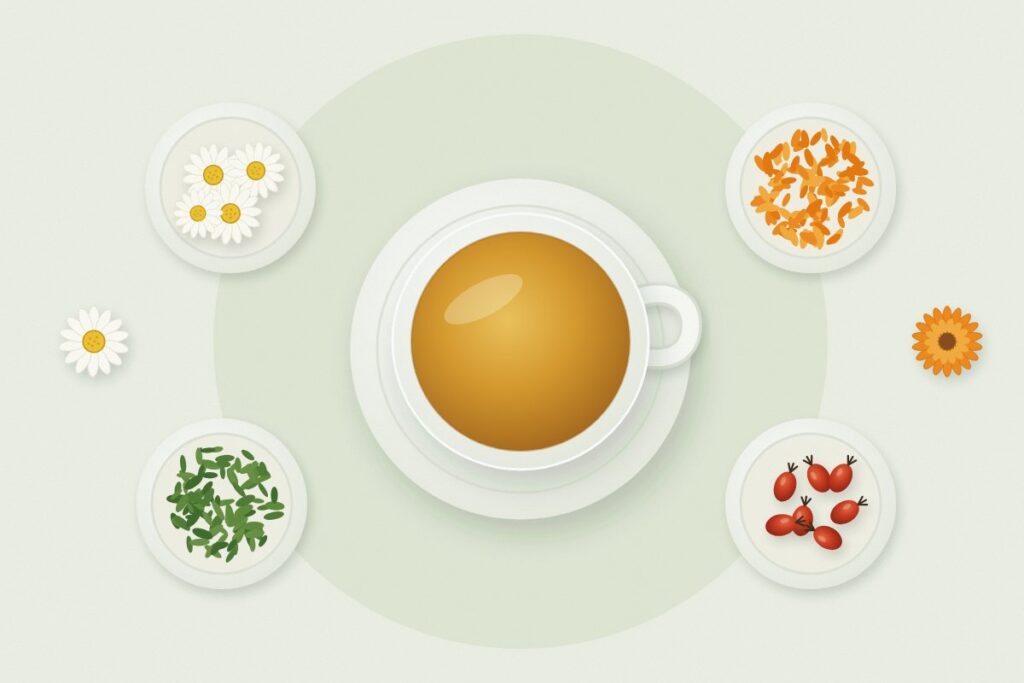
Different parts of plants are used for herbal teas:
- leaves: peppermint, lemon balm, sage, nettle,
- flowers: chamomile, linden, lavender, calendula,
- fruits and seeds: rose hips, fennel, anise, caraway,
- roots and rhizomes: ginger, licorice root, marshmallow,
- bark: cinnamon.
Rooibos and hibiscus belong here too: neither comes from the tea plant.
How to prepare herbal tea
How to prepare an herb depends on which part of the plant you are using.
| Method | Best for | How to do it |
|---|---|---|
| Infusion | leaves and flowers | pour boiling water over, cover, steep for 5–10 minutes |
| Decoction | roots, bark, hard seeds | simmer for 5–10 minutes over low heat, then let stand |
| Cold infusion | marshmallow and other herbs with mucilage | pour cold water over and let stand for half an hour up to several hours |
For a cup (150–250 ml), 1 to 2 teaspoons of dried herb is usually enough, which is about 1.5–3 g. Cover the cup while steeping. Otherwise the aromatic compounds that give the herb its flavor escape with the steam. With fresh herbs, use about three times the amount.
You can also combine herbs. Peppermint with lemon balm, chamomile with lavender, rose hips with hibiscus, or ginger with cinnamon and lemon all work well. We describe the preparation of individual herbs in the articles on chamomile, peppermint and lavender tea.
What to expect from herbal teas
Herbal teas have many benefits that are certain:
- They contain no caffeine, so they suit the evening and people who want to cut down on caffeine. More in the article How to cut down on caffeine.
- They have almost no calories if you do not sweeten them. That makes them a good replacement for soda and juice.
- They help you drink more, especially in winter, when cold water is not appealing.
- A warm cup in peace is a pleasant moment for yourself.
For some herbs, traditional use is also recognized. The European Medicines Agency (EMA) publishes monographs on medicinal herbs. They describe for which mild complaints an herb is traditionally used, for example peppermint for a feeling of heaviness after a meal or chamomile for bloating. Traditional use is based on long experience, not on clinical studies.
Claims that herbal teas cure cancer or diabetes or boost immunity are not supported by evidence. In addition, herbal tea sold as a food in the European Union may not promise to cure anything. If you have health problems that do not go away, see a doctor.
What to watch out for
Herbs are natural, but that does not mean they are always harmless.
- Medication: some herbs affect how medicines work. For example, St John’s wort weakens the effect of many medicines, including hormonal contraception. If you take medication, talk to your doctor or pharmacist about drinking herbs regularly.
- Licorice root can raise blood pressure when drunk often and over a long time.
- Laxatives such as senna or buckthorn are not for long-term drinking. They are also found in “detox” and “weight loss” teas. More in the article Tea and weight loss.
- Allergy: chamomile, calendula and arnica belong to the daisy family. People who are allergic to ragweed or wormwood may react to them.
- Pregnancy and children: with some herbs you need to be more careful. We cover this in detail in the articles Herbal tea during pregnancy and Herbal teas for children.
- Vary your herbs. During harvesting, weeds containing pyrrolizidine alkaloids can get mixed into herbal teas, and in larger amounts these harm the liver. For this reason, since 2022 the European Union has set how much of them may be present in herbal teas. Still, it is sensible not to drink a large amount of a single herb over the long term and to rotate them.
Loose herbs or tea bags?
In tea bags, the herb is often crushed to dust, loses its aroma faster, and you cannot see what is in it. Whole leaves and flowers keep their flavor better, and you can see their quality right away. More in the article Loose leaf tea vs. tea bags. How to store herbs and how long they last is described in the articles How to store loose leaf tea and Does tea expire?.
Sources
- European Medicines Agency (EMA), Committee on Herbal Medicinal Products (HMPC) – European Union monographs on medicinal plants.
- Commission Regulation (EU) 2023/915 on maximum levels for certain contaminants in food (pyrrolizidine alkaloids in herbal infusions, originally Regulation 2020/2040).
- Regulation (EU) No 1169/2011 on the provision of food information to consumers (ban on attributing medicinal properties to foods) and Regulation (EC) No 1924/2006 on nutrition and health claims made on foods.
We revised this article on November 24, 2026. It is for general information only. For details, see our Disclaimer.